
Street Art
Street art began in Philadelphia during the late 1960s, and by the 1970s gained underground fame as an art form with a group of South Bronx “writers,” predominantly kids of color who recognized the power of writing on walls, subway cars, buildings, and bridges. By the early 1980s street art developed complex expressions of hidden codes and signs, as seen in Charles Ahearn’s iconic documentary Wild Style (1983), which premiered at Documenta XII in Kassel, Germany. Street art was then introduced to the blue-chip, uptown art world when Sidney Janis featured two shows on the subject, Post-Graffiti (1983) and Modern Expressionists (1984), at his eponymous gallery. That same year, the Museum Boijmans Van Beuningen in the Netherlands presented the exhibition Graffiti, bringing street artists institutional acclaim. Today, street art is no longer solely associated with notions of vandalism and youth rebellion but instead exemplifies an aura of urban cool. Some of the most famous early “writers” from the Bronx, such as Futura 2000 and Crash, now create works that are commonly sold through established galleries and auction houses.
Street art’s trajectory is still unfolding, with its history often reliant on oral accounts. Teasing out its history is crucial for a more inclusive understanding of postwar art. Early commercialization of street art began with Hugo Martinez, who established the artist collective United Graffiti Artists (UGA) in 1972 and subsequently opened Razor Gallery in SoHo a year later. Thereafter, two significant artist initiatives promoted the “Golden Age” of graffi ti, including Fashion Moda, a concept store in the South Bronx that mixed hip-hop, graffiti, and break dancing. In 1980, John Ahearn and Tom Otterness curated the groundbreaking Times Square Show in a vacant massage parlor. That same year, cult film star Patti Astor opened FUN Gallery with Bill Stalling on the Lower East Side, representing the first gallery to offer solo shows to now-iconic graffiti artists including her then boyfriend, Fab 5 Freddy, along with Dondi, Lady Pink, Kenny Sharf, and Keith Haring. Astor also succeeded in placing the first artwork by a graffiti artist— Fab 5 Freddy—into a mega-collection, owned by the renowned dealer Bruno Bischofberger. The crucial role that legal artists’ spaces have served in fostering the development of the art form is perhaps best epitomized by 5Pointz, a Queens warehouse which in the mid-1990s the artist Meres One developed into the largest and most significant legal exhibition space; Meres One curated some two thousand intergenerational aerosol artworks to establish by the mid-2000s the world’s most significant street art exhibition space, one of international repute known as the Institute of Higher Burin. It became perhaps even more historic when it was whitewashed by its landlord in 2015, leading to the landmark case to establish the legal precedent for artists’ moral rights in the United States under the statute of VARA (Visual Artists Rights Act, 1990). Furthermore, this watershed victory in graffiti history represented the recognition of graffiti and street art as an art form in its own right and signified its importance to visual culture.
The secondary market for street art began with the first American auction dedicated to graffiti art, held at Guernsey’s in New York City in 2000. While it was a modest commercial success, the event marked a significant moment in auction market history, featuring around four hundred works over two days. Commercial appeal for street art on the secondary market grew with Bonhams’s dedicated sale in London in 2008, followed by a sale at Doyle Auctions two years later, which further popularized it as a unique collecting category with dedicated experts and specialists.
Research and Resources
The movement was also officially legitimized with its identification by sociologists, urban historians, cultural critics, and photographers. The first book on the subject was Norman Mailer’s The Faith of Graffiti (1974). The genesis of the art form was documented by American photographers, including Jon Naar, Gusamao Cesaretti, and the iconic Martha Cooper, whose archive is now maintained at STRAAT and in the Cornell Hip-Hop Collection. In 1988, Cooper co-published her photographs with Henry Chalfant, in what is the bible of graffi ti art, Subway Art, currently in its twenty-fifth edition. Several museum exhibitions and their catalogues validated the movement in art history, most significantly with the East Village USA (2005) exhibition at the New Museum and Art in the Streets (2011) at the Museum of Contemporary Art, Los Angeles.
Appraisers of street art will need to go beyond traditional sources and utilize online resources such as blogs, street art journals, social networks, artist forums, virtual exhibitions, artist spaces, and even YouTube to properly assess the significance and status of street artists. Other insider sources, including online platforms like Fatcap.com, reflect artistic status and provide valuable information.
Valuation Considerations
The currency of street art is created through acts of repetition, ubiquity, and public exhibition, making it essential for researchers and appraisers to adopt a holistic approach that considers qualitative and quantitative factors, even when market information is nontraditional to fine art. To assess the value of an artist’s work, one must examine their website, career trajectory, notable achievements, affiliations with corporate brands, and social media presence.
Qualitative Considerations
Appraisers assessing street art should utilize a research methodology that combines digital art history with traditional market approaches. Unlike established fields of art such as Impressionism, street art lacks authoritative resources, compendiums, or expert scholars, which makes an appraiser’s judgment crucial. Market data can be found not only on social media but also through the artist’s studio, website, related merchandise, and platforms like Hypebeast, 1stDibs, Etsy, and eBay. Therefore, appraisers should expect to cast a wide net to gather and evaluate information from sources ranging from Google image searches to specialized collections and archives.
ARTIST REPUTATION AND BRAND: Reputation, status within graffiti culture, and position as art world outsider are important factors when assessing value. Status largely indicates where one should expect to find relevant market data and will aid in identifying relevant comparables. There are, in this appraiser’s opinion, five reputational types of artists that share similar market characteristics and can provide a general framework to orient one’s approach: practitioner; insider; crossover creator; art market maker; and creative icon.
SOCIAL MEDIA STATUS: Given street art’s beginnings as public art made for the people, street artists were early adopters of social media to communicate, advertise, and make direct sales. Thus, appraisers should consult an artist’s social media channels. Not only should quantitative metrics of an artist’s reputation be considered, sometimes it is even more important to evaluate the quality of followers, or those who reflect an artist’s level of influence, breadth of marketplace, and extent of appeal.
COLLABORATION WITH MASS MARKET BRANDS: Street artists were some of the earliest artists to work collaboratively with commercial brands to create signature products—ranging from sneakers to designer wallpaper— and to play a part in corporate marketing. Whether “work for hire” or collaboration, such partnerships may reinforce their fine art marketplace and expand their reputational status.
DISCRIMINATION OF ARTWORK QUALITY: When considering quality, the connoisseur seeks to discriminate between good, better, and best. The street art market requires the same, but with a little “extra,” as the art form has its own materials, medium, and hierarchy of associated market value that should be situated within the larger historical context. Qualitative standards are associated with forms that range from the easiest to the most complex. In ascending order of complexity, difficulty, and respectability within street art’s culture are the following forms: tagging (artist’s logo or signature in one color) ; throw-ups and throwies (quickly executed lettering); stencils (fast application of a pattern); collabos (a collaboration of artists); Wildstyle (complex lettering); and pieces (masterpieces). The appraiser should consider the art object’s quality within the context of different aesthetic systems when relevant: street art’s hierarchy; fine art ecosystem; and lifestyle culture.
ARTWORK STATUS: Some street artists, particularly those of the first and second generations, began making studio art long after they crafted their signature style in public art. These studio works may memorialize significant works that were lost to the cityscape or authorities. Also, certain works are representative and include important iconography that cultivates demand. For instance, Basquiat’s crown has become the art market’s ultimate signifier of the quality and demand of a particular art object. Thus, an appraiser must familiarize themselves with the signs and symbols that define lesser-known street artists’ career highlights and relationships to iconic works and signature themes or characters, as these qualities will often have an impact on its valuation.
RARITY: The significance of an object in street art can often be determined by its replication, repetition, and readability, rather than its rarity. Appraisers need to consider if the ubiquity of an image defines an artist’s career and working practices and thereby influences its value. Contemporary street artists have enhanced their reputations through the distribution of affordable media, as evident in Shepard Fairey’s famous Hope series for Barack Obama’s 2008 presidential campaign. This strategy is further applicable to NFTs, where artists like Invader leverage their iconic characters in large editions with an irreverence toward scarcity value.
Quantitative Considerations
While consulting price databases, auction house websites, and art market metrics are common practices typical to fine art, finding comparables for street art can be challenging. Traditional art market sales databases may not include relevant secondary market sales, especially online auction sales results that are often excluded, expired, or unpublished. Appraisers may need to mine alternative resources for comparables, including studio sales, artist interviews, concept stores, and online sales from design, lifestyle, or artist’s shops.
Additionally, street art is challenging due to its undocumented status, the use of aliases, or its unidentified makers. Appraisers must carefully evaluate the artist’s marketplace depth, often without comprehensive data or art market analytic reports. Comparables are often found in multiple marketplaces, including widely varying platforms of reliability (e.g., eBay), which require careful consideration of relevance to the purpose of the appraisal.
For artists with limited recognition in the art market, such as local studio artists, appraisers should consider their market status and adjust the valuation methodology accordingly. These artists may have minimal and nontransparent transactions, resembling traditional emerging artists without an established marketplace. Caution is advised to avoid equating artists with vastly different reputational status or brands. Appraisers should seek comparable artists within the same artistic community and social circles for more relevant analyses. The most suitable comparables are often those from the same generation, potentially collaborating or belonging to similar crews, or connected through regional styles and working practices.
When appraising street art, it is crucial to determine its marketability, considering the range of materials, media, and products that can be commonly sold. Appraisers should consider five factors in their report to gauge a work’s marketability: 1) depth of the artist’s marketplace; 2) liquidity levels of the artwork; 3) nontransparent market activity including private commissions; 4) speculation and market manipulation levels; and 5) the role of warranties and guarantees.
Determining the most relevant marketplace for street art is a crucial step because it is sold through a variety of channels and marketplaces, which range in reliability from artist website “drops,” Instagram sales via direct messages, unvetted concept auctions, or prestigious guarantees offered by leading international auction houses. Appraisers must conduct due diligence and evaluate comparable transactions from nontraditional marketplaces. Additionally, they should discern the level of prestige associated with the marketplace where the artist is most commonly sold, considering its impact on associative prestige, demand levels, and breadth of collectors. This analysis can involve niche auction houses like Rago (New Jersey) or renowned international houses such as Phillips.
Collectors
Early “writers” did not monetize their careers and existed outside official art world commercial systems. Some artists such as StayHigh195 are primarily bought by niche collectors, while others like Swoon are frequently traded in the broader contemporary art market. Furthermore, since young artists have adopted techniques, styles, and strategies from graffiti writers, they have wide appeal to both collectors in the street and contemporary art markets. In order to avoid a common pitfall of misunderstanding desirability, demand, taste, and operative buying behaviors outside of art marketplaces, appraisers should be cautious about underestimating or dismissing the full range of the collector base for street art, which is often young and emerging collectors. Some of the most noteworthy collectors of street art only bought directly from artists, their related crews, and their circles of friends, most notably Martin Wong, a Lower East Side artist. Because street art has always existed as public art, many architects and designers continue to act as curatorial conduits and commission works directly for their client base.
Other Valuation Considerations
OWNERSHIP (CLEAR TITLE AND PROVENANCE): Appraisers should be proactive in seeking information from the owner of an undocumented work by requesting sales receipts, conducting reverse image searches, and investigating archival resources to verify clear title because many works are illegally procured from public spaces.
CERTIFICATES OF AUTHENTICITY: There are many highly coveted street artists, such as Banksy, who have their own authentication services, and therefore valid certificates are necessary for a work to be fully valued and marketable.
FAKES AND FORGERIES: Assessing authenticity in street art’s marketplace is challenging, especially for official merchandise with cult status that is traded online without personal inspection, which increases the risk of encountering fakes and unauthorized editions. Appraisers should exercise skepticism, request purchase documentation, conduct due diligence, and seek information from official sources including commercial brands when necessary.
CONDITION: Condition assessment for street art is complex as there is no clear hierarchy from “unsaleable” to “mint.” Objects from the urban environment, including architectural fragments, hold value with collectors appreciating the patina of urban decay, necessitating a contextual consideration of the artwork’s identity, artist’s status, and collectors’ preferences.
WORKS IN SITU: For public works that are in situ, appraisers should address the feasibility of removal and its potential impact on marketability. If the artist in question creates commissioned works, their studio is often a valuable resource for comparables and should be consulted. In the absence of market data, making parallel comparisons with artists of similar style or aesthetic is reasonable, but caution should be exercised to avoid equating artists with significantly distinct levels of reputational stature.
Conclusion
This introduction to valuing street art could never do justice to the exceptional depth, variety, and creative abundance that represents one of the most significant artistic movements and fastest expanding marketplaces of the twentieth and twenty-first centuries. While the impulse to declare one’s presence through mark making is as ancient as the caves of Lascaux, the significance of street art and its cultural impact remains to be fully determined and understood.
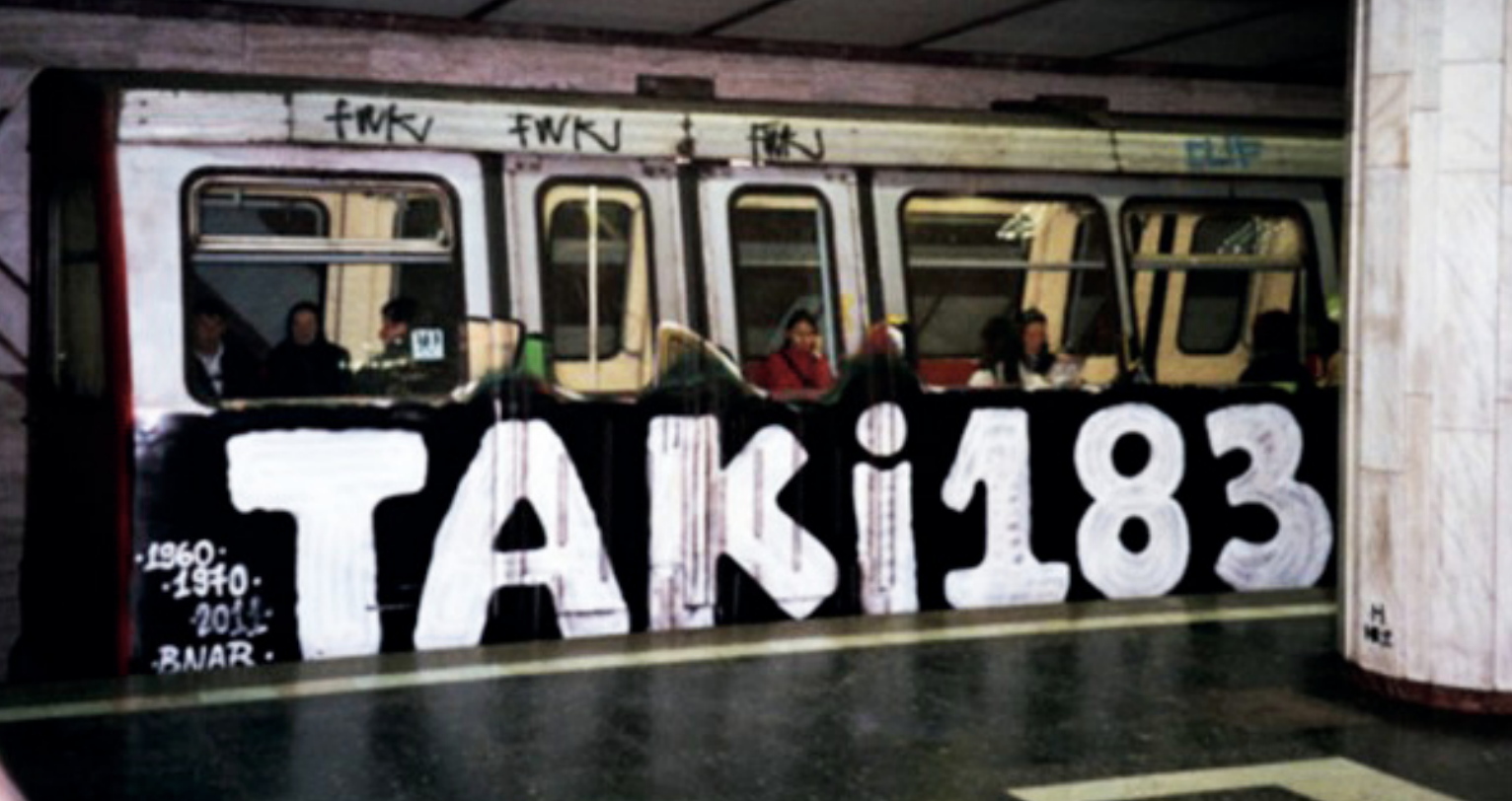
Demetrius (American), TAKI 183, aerosol spray on metal subway car, c. 1970, New York City. Courtesy © TAKI 183.

Unknown, Tags Under A Bridge, c. 2023, aerosol spray on cement, Sag Harbor. Courtesy of Vara Art.
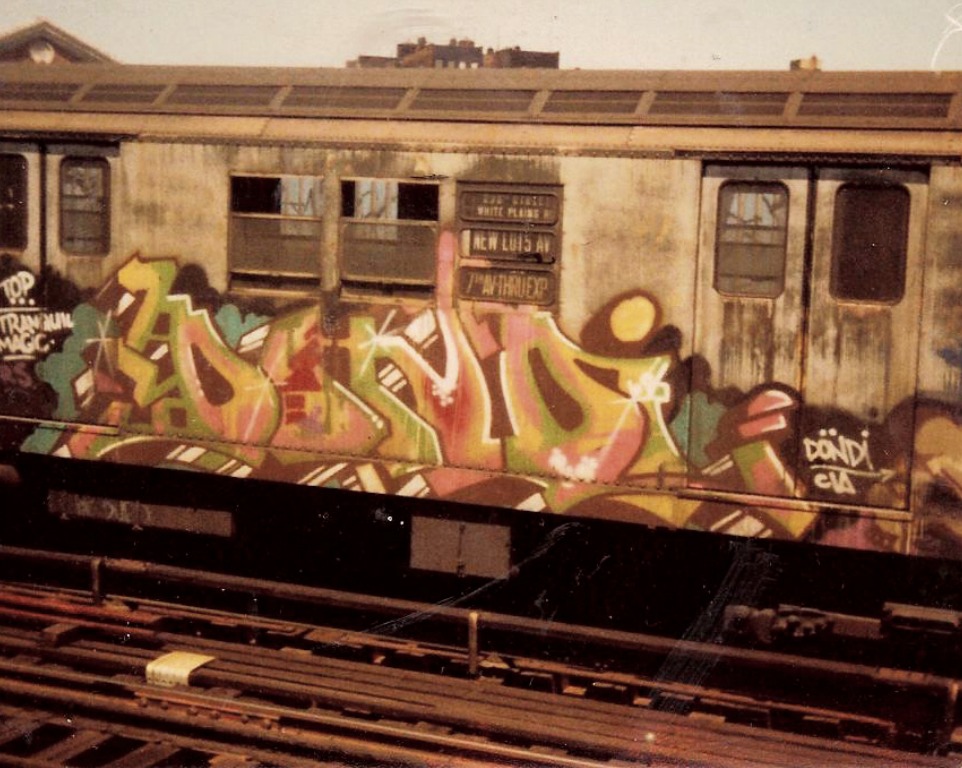
Donald Joseph White (American, 1961–1998), DONDI, c. 1979, aerosol spray on metal subway car. Courtesy © DONDI.
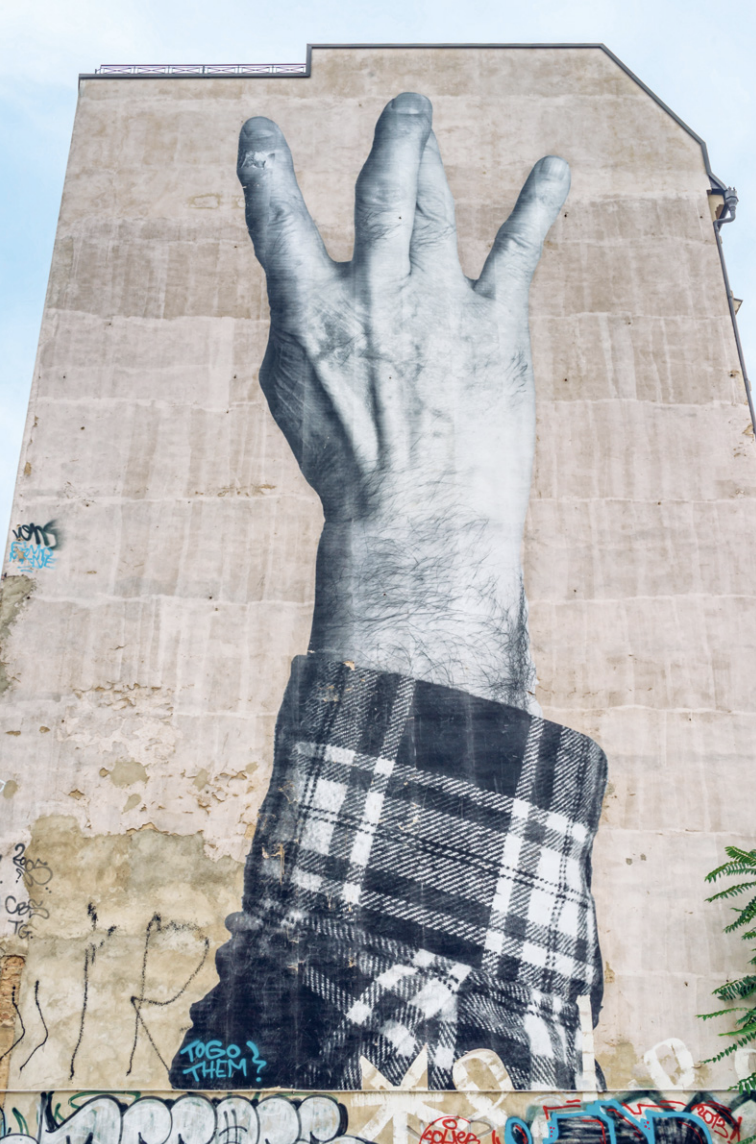
JR (French, born 1983), Mural with Hand on Invaliden Street, Mitte, Berlin, c. 2013, mixed media on cement. Courtesy © JR.
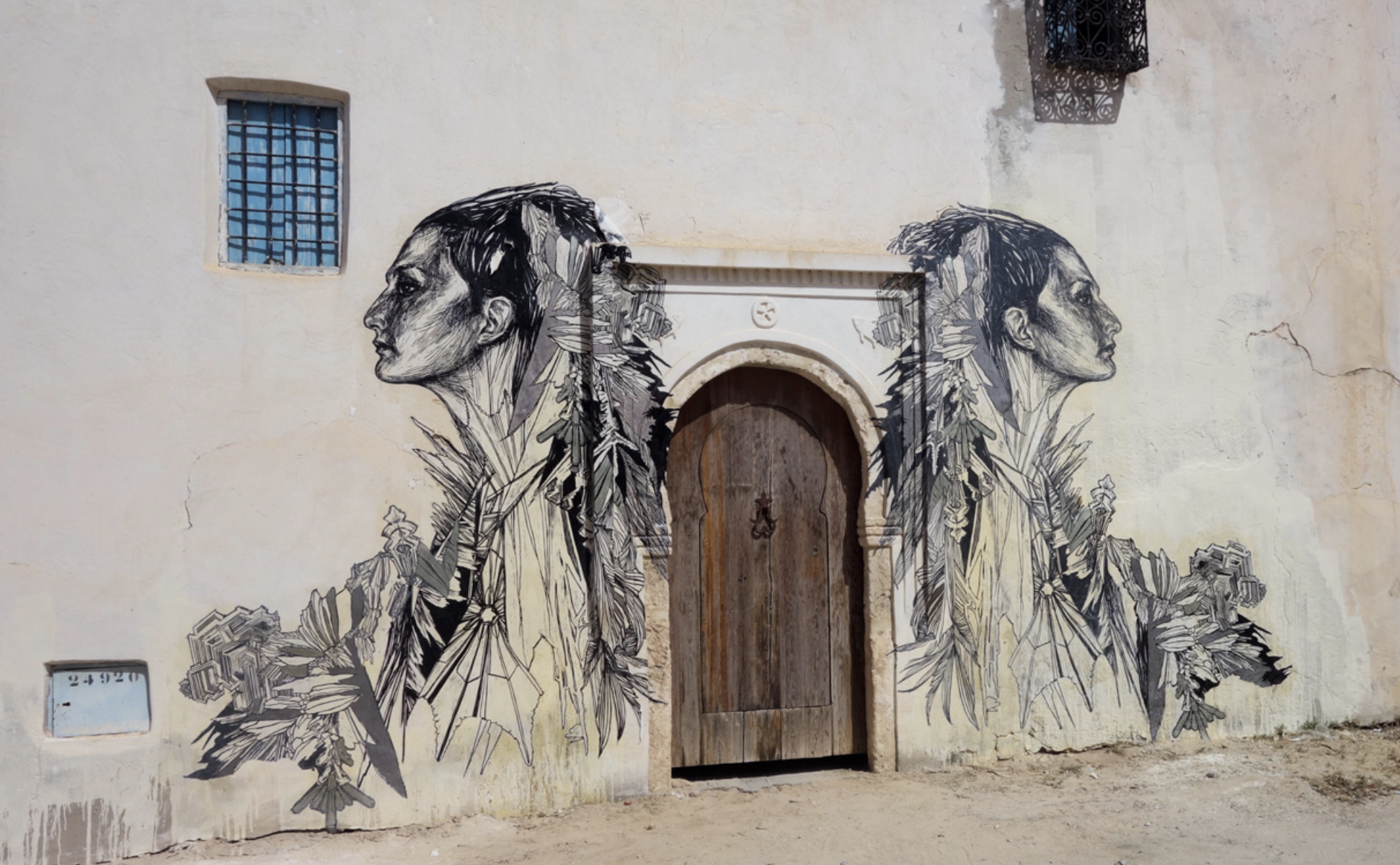
Calcedonia Curry (American, born 1977), Swoon, c. 2014, public piece in Djerbahood, Tunisia. Courtesy © Swoon.
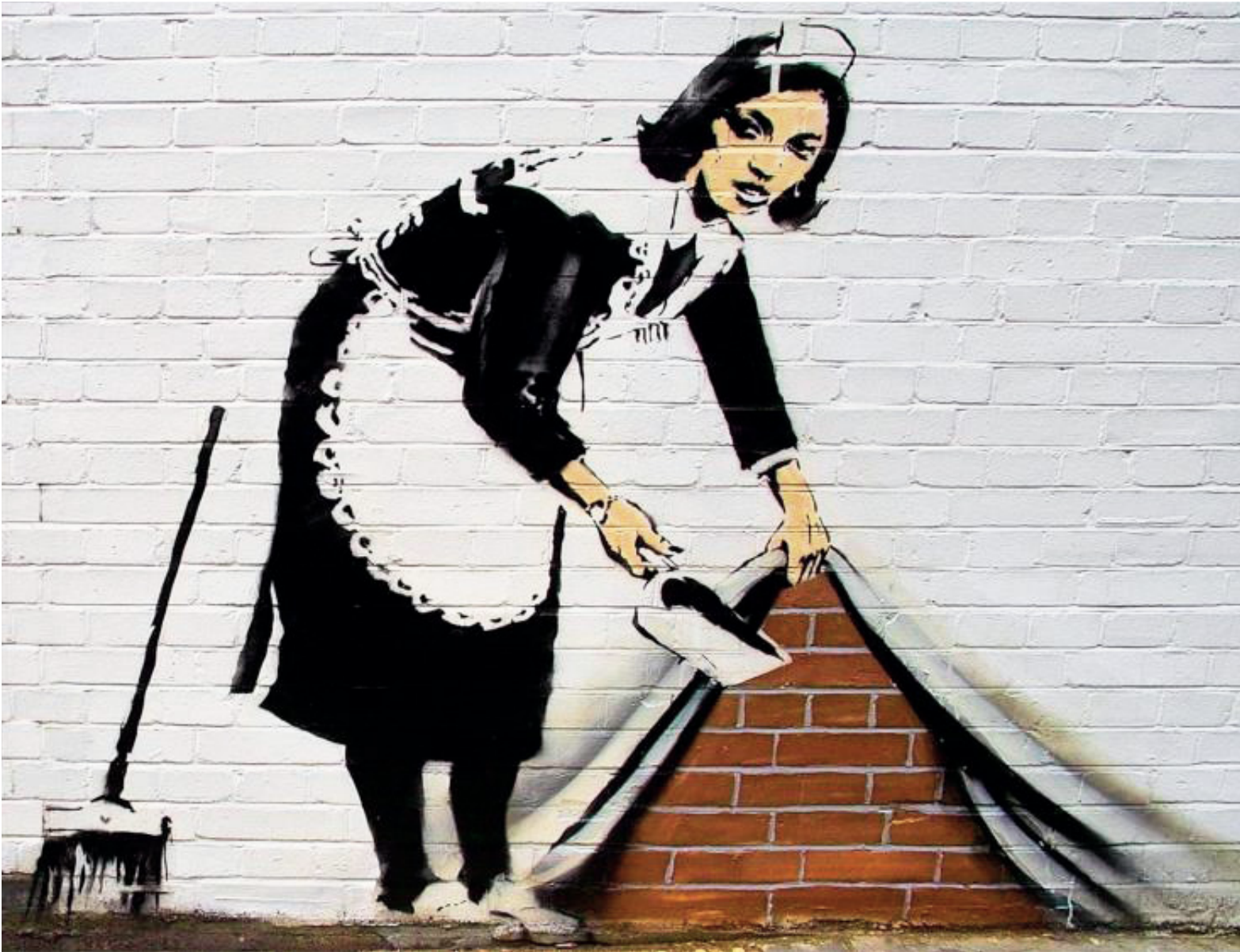
Banksy, Sweeping It Under the Carpet, c. 2006, aerosol spray on brick and mortar, White Cube Gallery, Hoxton Square, London. Courtesy © Banksy.
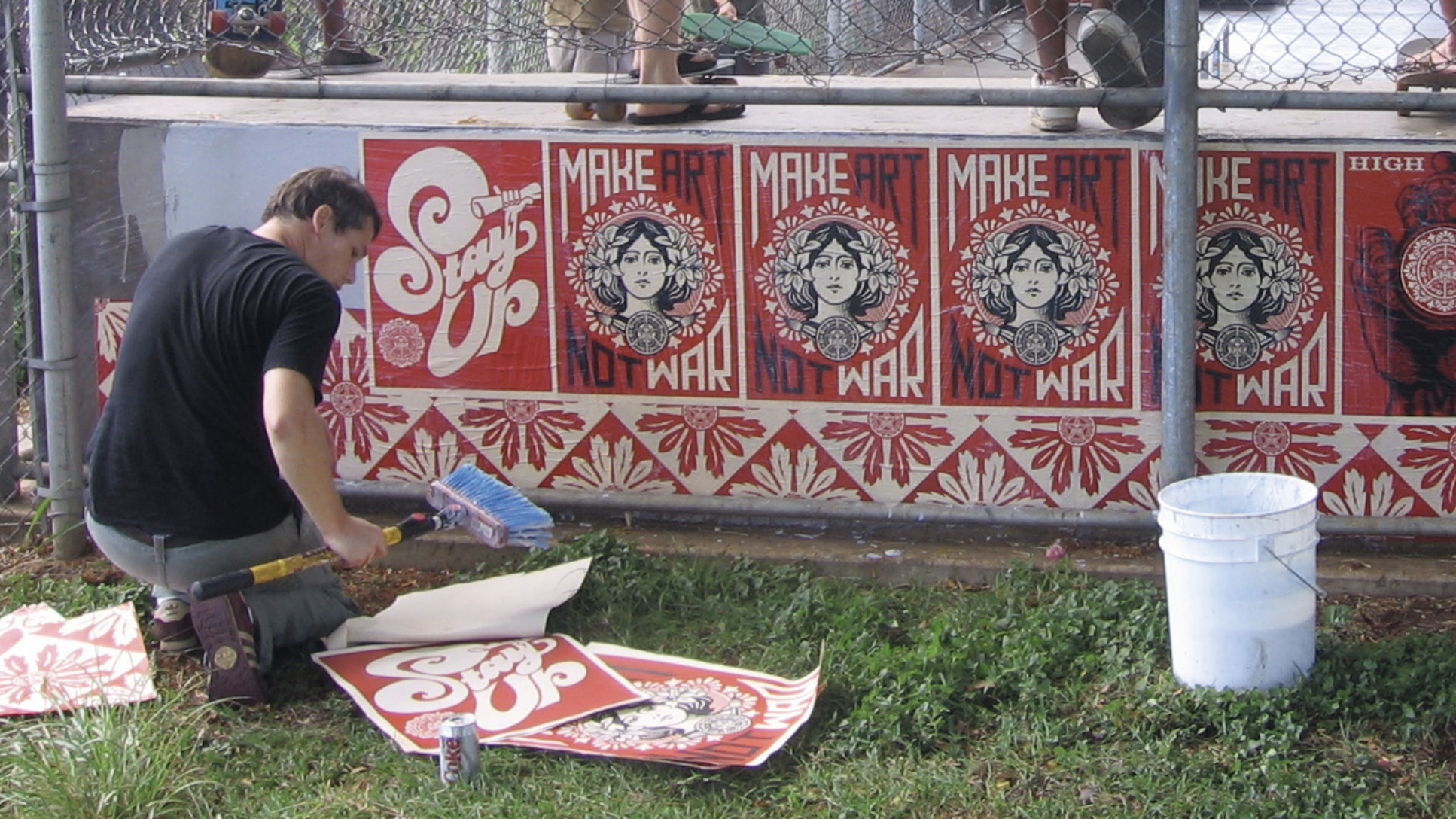
Shepard Fairey (American, born 1970), Fairey wallpapering Hawaiian-themed variations of his art on the Rink’s vertical surfaces at the Makiki, Honolulu Skate Park, c. 2005, wheatpaste posters. Courtesy © Shepard Fairey.
Article Authored by Renée Vara in 2024. Reprinted as originally appeared in AAA's Definitive Guide - Volume 2, 2024. All content ©️ Renée Vara & The Appraiser Association of America