
The Whitney Biennial remains a key barometer of U.S. contemporary art. Established in 1932 as a platform for American artists, its scope has since broadened to reflect a more inclusive and global definition of “American.” It has long played a decisive role in shaping careers and the market for young artists, most notably with Jean-Michel Basquiat’s historic inclusion at the age of 26. But it also serves as a continual site of controversy, offering a window into broader cultural debates. For instance, Dana Schutz’s Open Casket sparked protests about cultural appropriation and posed urgent questions around whose voice, and thus authority, is worthy of centering.
So what of this year? Following over 300 studio visits, the curators selected 56 artists, duos, and collectives, aiming to construct a dialogue around infrastructure and relationality, imperialism and ecology. Curators Marcela Guerrero and Drew Sawyer position the exhibition as a survey, yet such an ambition feels increasingly untenable in a moment defined by immeasurable artistic output. The curatorial task, then, lies in shaping a framework that allows works to inform a vision while still articulating a point of view, whether thematic or reflective of the zeitgeist. Without this, the exhibition risks reading as a series of singular “picks” rather than a cohesive thesis. My opinion notwithstanding, the prevailing sentiment among many practicing artists I spoke with, particularly those mid-career, is one of dissatisfied consensus. Perhaps the esteemed critic Hilton Als captured this tension best with his incisive review in The New Yorker, which he subtitled: “How the artists in this year’s survey do or, more often, don’t acknowledge those who paved the way for them.”
For those of us who have followed contemporary art for decades, the exhibition at times skews too ethnographic. Many installations assume an outsized presence and are afforded too much space, and the decision to feature fewer artists with greater scale feels ultimately like a curatorial miscalculation. In turn, much of the curatorial armature is left to the artists themselves, and as a result, the dialogue between works often feels disjointed rather than interwoven. At a moment when we regularly encounter highly developed single-artist presentations at every fair, including ones with significant curatorial focus such as Independent and Art Basel|Basel, a biennial’s success lies not in assembling a collection of artists, but in its ability to surface new aesthetic languages, foreground cultural concerns, and articulate a sense of the current moment.
Whilst immersion in an artist’s viewpoint is often most beneficial in large-scale installations, too many works feel unresolved and their space gratuitous. Installation art is not only about ideology or theory, but it also requires rigorous attention to the work's relationship with the viewer and spatial resolution. Although installation dominated the exhibition, the most compelling contributions are sculptural, offering a refreshing counterpoint to the prevalence of flat art seen at fairs since the “little” art recession. Among the most widely discussed works, Michelle Lopez’s Pandemonium (2025) is arguably the most popular with visitors. Yet, while fun and impeccably installed, it felt overly memetic—an animated evocation of an Italian chapel rotunda—and too entertaining to justify a large gallery, lacking any scent of the avant-garde and thus appearing more appropriate for the mass entertainment-light exhibitions, which riff off of major historical artists. Additionally, Oswaldo Maciá’s Requiem for Insects (2026), while one of the stronger installations, would have benefited from further editing and tightening to reach its full potential.
Notable moments did emerge, particularly when curatorial relationships were more deliberate, such as in the dialogue between Andrea Fraser and Carmen de Monteflores, where the interplay between sculpture and painting worked effectively. In addition, sculptures felt more contained, more resolved, and more successful by engaging with the architecture and viewers, and thus offered refreshing moments in a time awash in flat art. This was especially evident in the work of Sarah M. Rodriguez, whose contribution stood out for its conceptual clarity and material mastery. Outside the museum, Too Ancient to Care (2024–2026) by Raven Halfmoon stands among the strongest works, reflecting an aesthetic clarity of the interrelationship between material, space, and conceptual underpinnings.
All in all, the collapse of sustained art criticism, particularly within legacy media, has left the public and museum-goers increasingly on their own to decipher and discriminate. A 1983 Whitney review from Judd Tully (cited below), a highly respected critic and filmmaker, exemplifies just how flattened and euthanized contemporary art criticism has become due to its inability to generate advertising dollars. In a content-saturated landscape, learning from critics and specialists about what is great, what merits attention, and the critical thinking behind those distinctions is more essential than ever, as it allows audiences to refine their own analytical frameworks.
With this in mind, I suggest you become your own art critic and visit before the exhibition closes on August 23, 2026.
For various viewpoints, we suggest these critical reviews:
The New Yorker, Hilton Als on Influence and Derivation at the Whitney Biennial 2026
The New York Times on the 56 Artists of the Whitney Biennial 2026
Artnet on Carmen de Monteflores at the Whitney Biennial 2026
Artnet on Critical Frictions Within the Whitney Biennial 2026
Hyperallergic on Representation and Global Voices in the Whitney Biennial 2026
Judd Tully on the 1983 Whitney Biennial’s Critical Voice
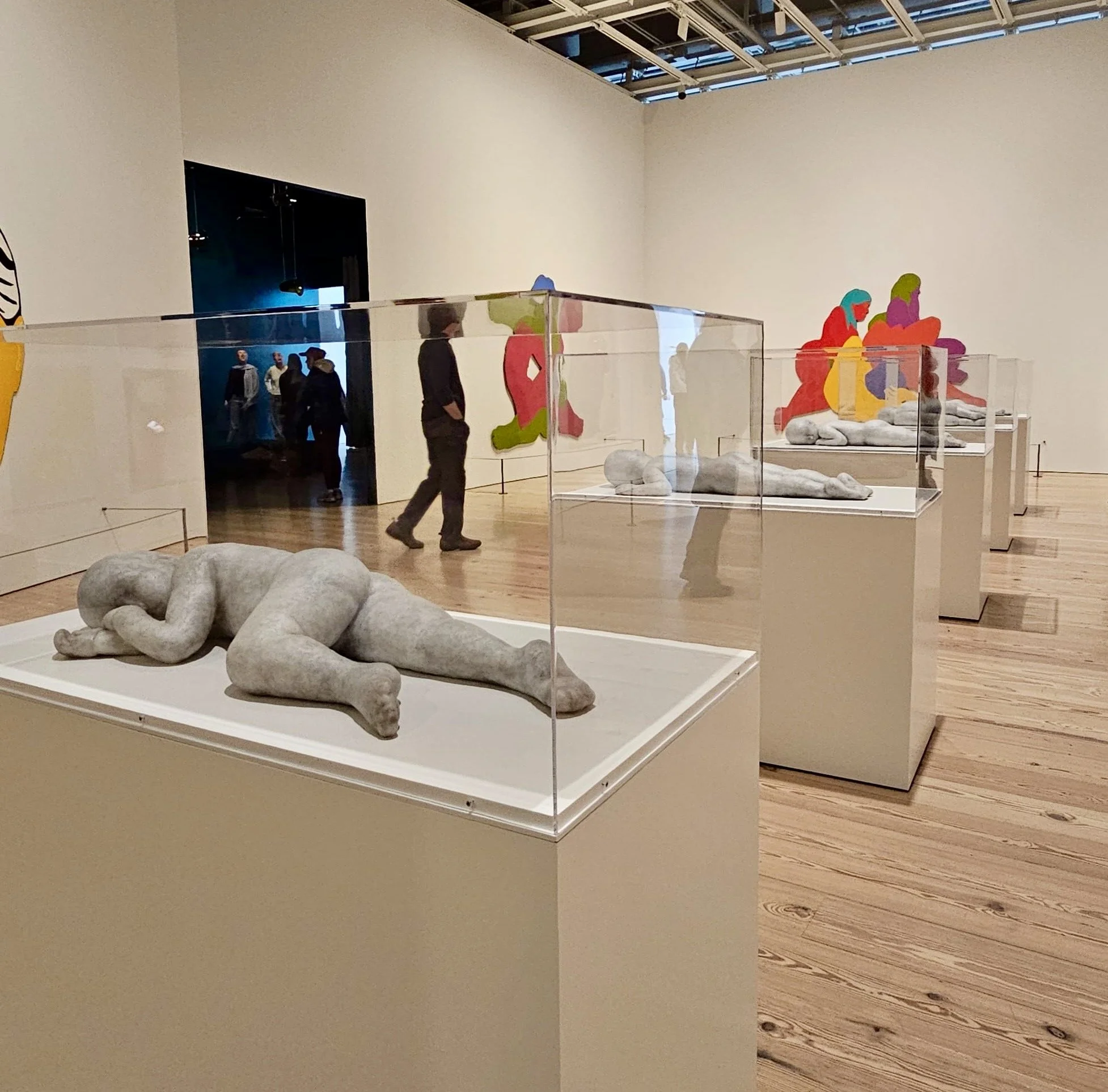
Credit & Courtesy: Installation view with paintings by Carmen de Monteflores on the back wall, Man and Woman Sitting, 1968, and Four Women,1969; sculptures by her daughter Andrea Fraser, Untitled (I), 2024, and Untitled (II-V), 2024.
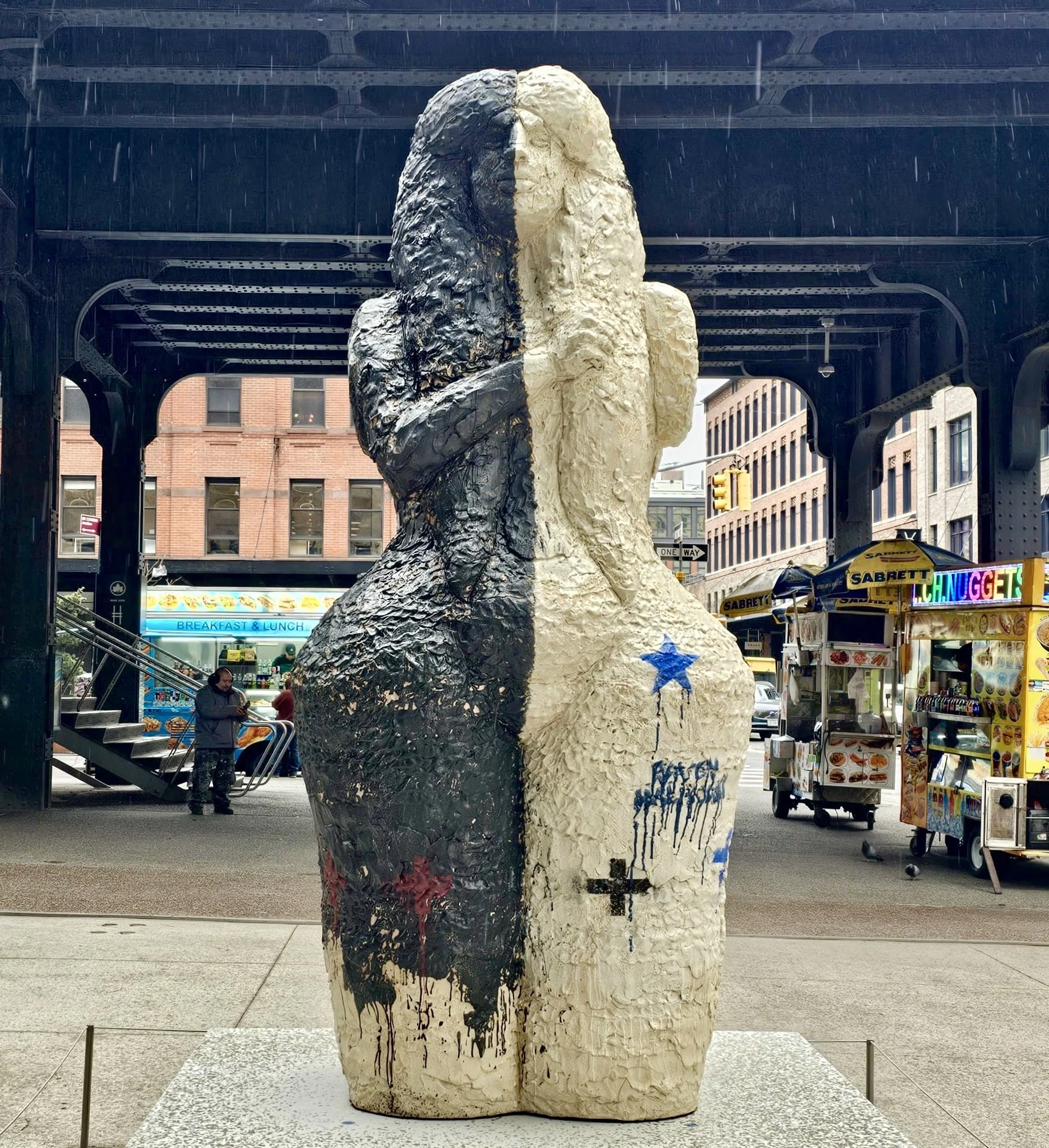
Credit & Courtesy: Raven Halfmoon, Too Ancient to Care, 2024-2026.
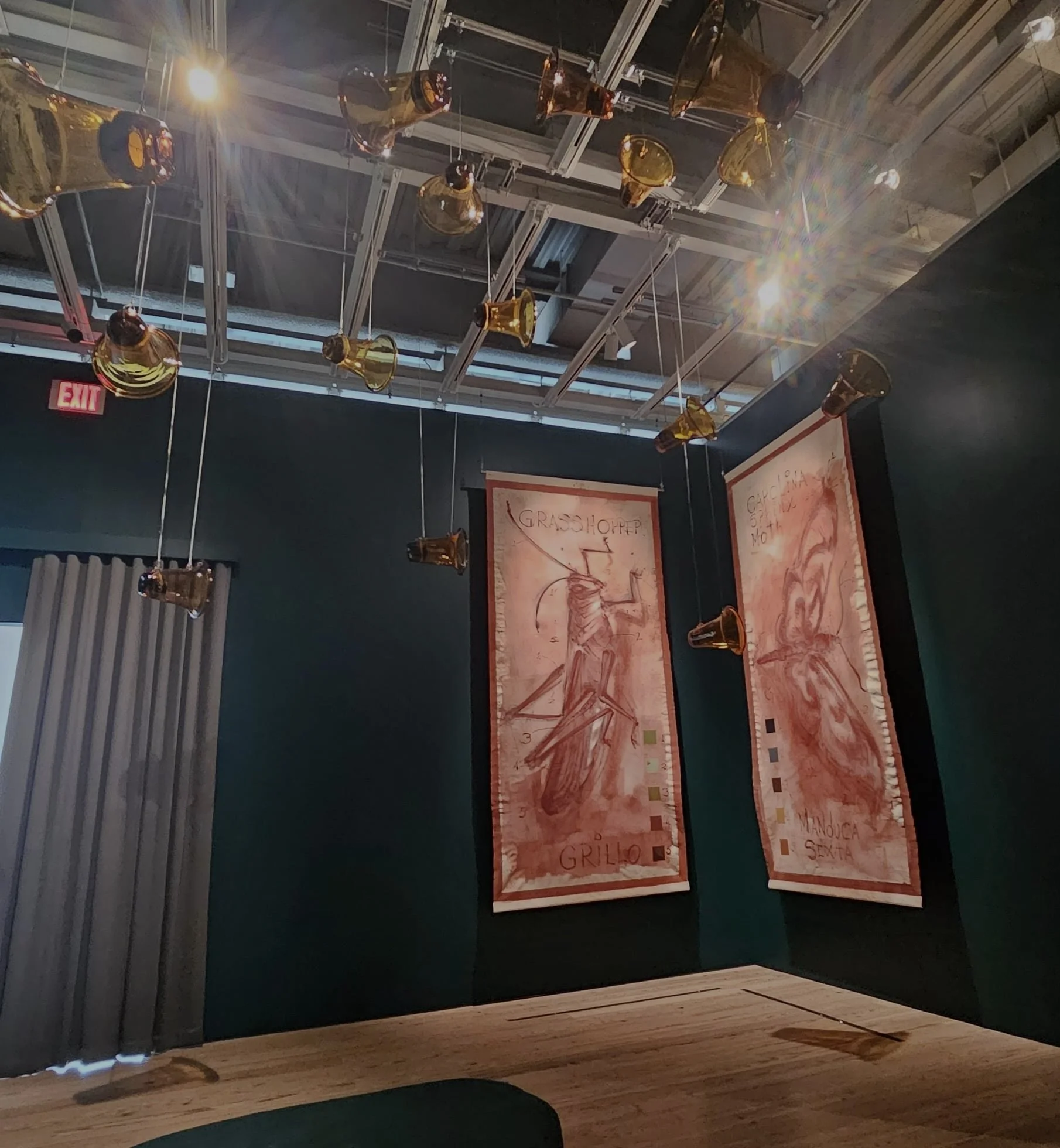
Credit & Courtesy: Oswaldo Maciá, Requiem for Insects, 2026.
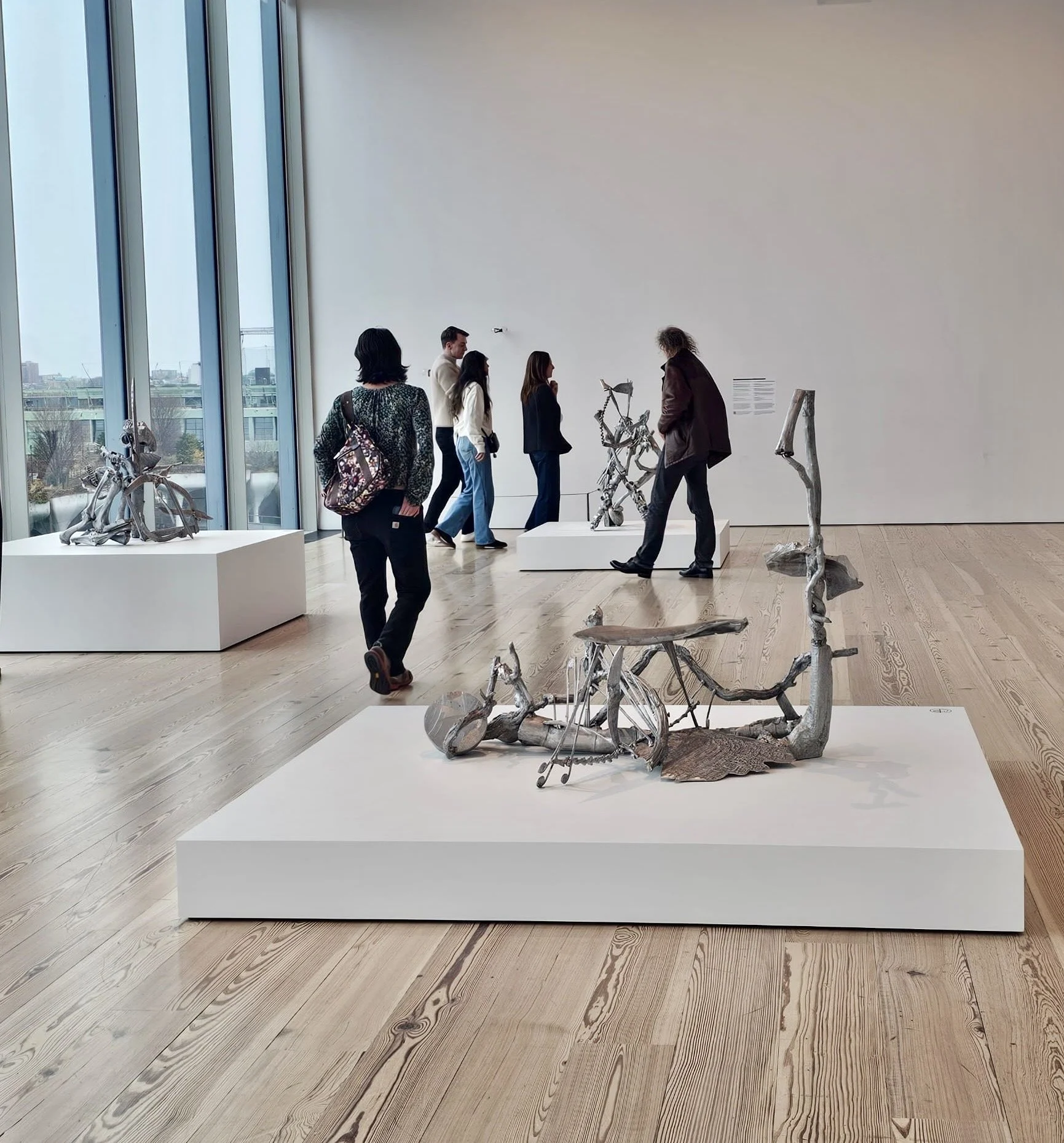
Credit & Courtesy: Sarah M. Rodriguez, Coil, Gather, Leap, 2025, Disperse 2025, Cover/Cross, 2025.
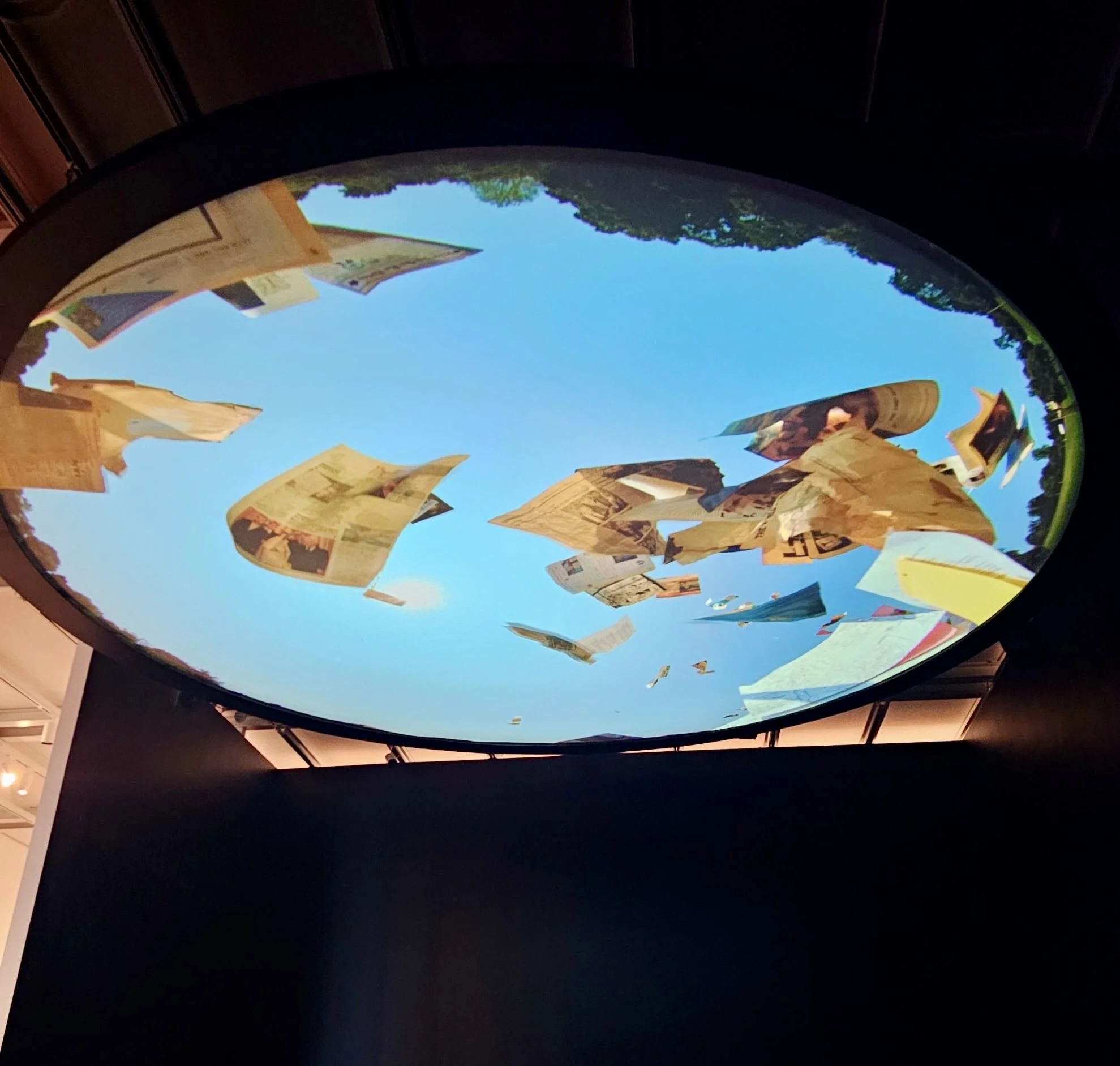
Credit & Courtesy: Michelle Lopez, Pandemonium, 2025.
All art © of artists and/or galleries. All content and images © VARA ART unless otherwise credited.