What happens when 30 years of art appraisal experience meets AI?
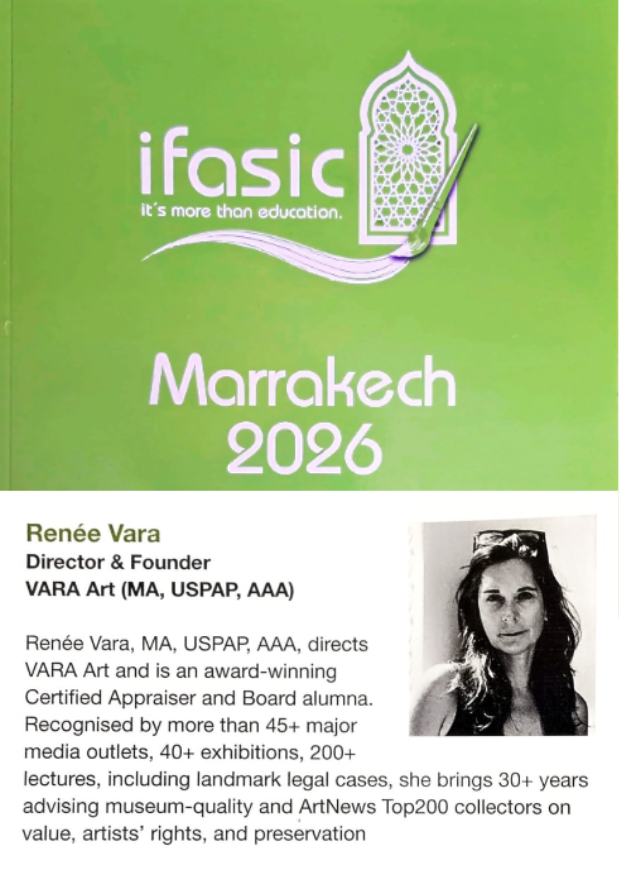
I just wrapped up a successful session at IFASIC in Marrakech! It was a pleasure to exchange ideas with colleagues on this evolving topic, and a lot of fun.
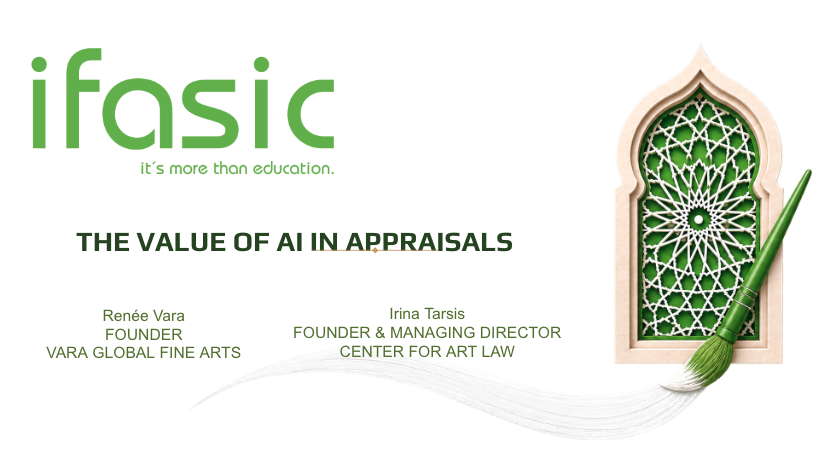
Bringing together 220 delegates from roughly 30 countries, IFASIC’s conference welcomed professionals from insurance, law, tax, and valuation. My session, “The Value of AI in Art Appraisals,” co-presented with Irina Tarsis from the Center for Art Law, explored how AI-integrated products may either benefit or degrade valuation quality and accuracy for both appraisal practitioners and users. Our session examined the trade-offs of specialized art AI tools, evaluating how well they balance efficient execution with the nuanced accuracy of an expert-authored appraisal.
Drawing on my various professional roles in both producing and using USPAP-compliant appraisals, I shared findings from my deep-dive review, including 5 case studies, of AI valuation products to offer guidance and encourage AI’s responsible application:
Key takeaways:
Opaque Methodology ("Black Box"): Factors, weighting, and rationale remain undisclosed as proprietary algorithms, making the methodology opaque to both users and appraisal producers. This firewalling of the valuation approach creates gaps that are often misaligned with legal standards and USPAP transparency and disclosure requirements.
Maintain Professional Standards: Faster turnaround should not come at the expense of sound methodology or professional judgment, as advised by the Appraisal Standards Board (ASB) at The Appraisal Foundation in Advisory Opinion 41. (AO-41: “Use of Technology in an Appraisal or Appraisal Review Assignment”)
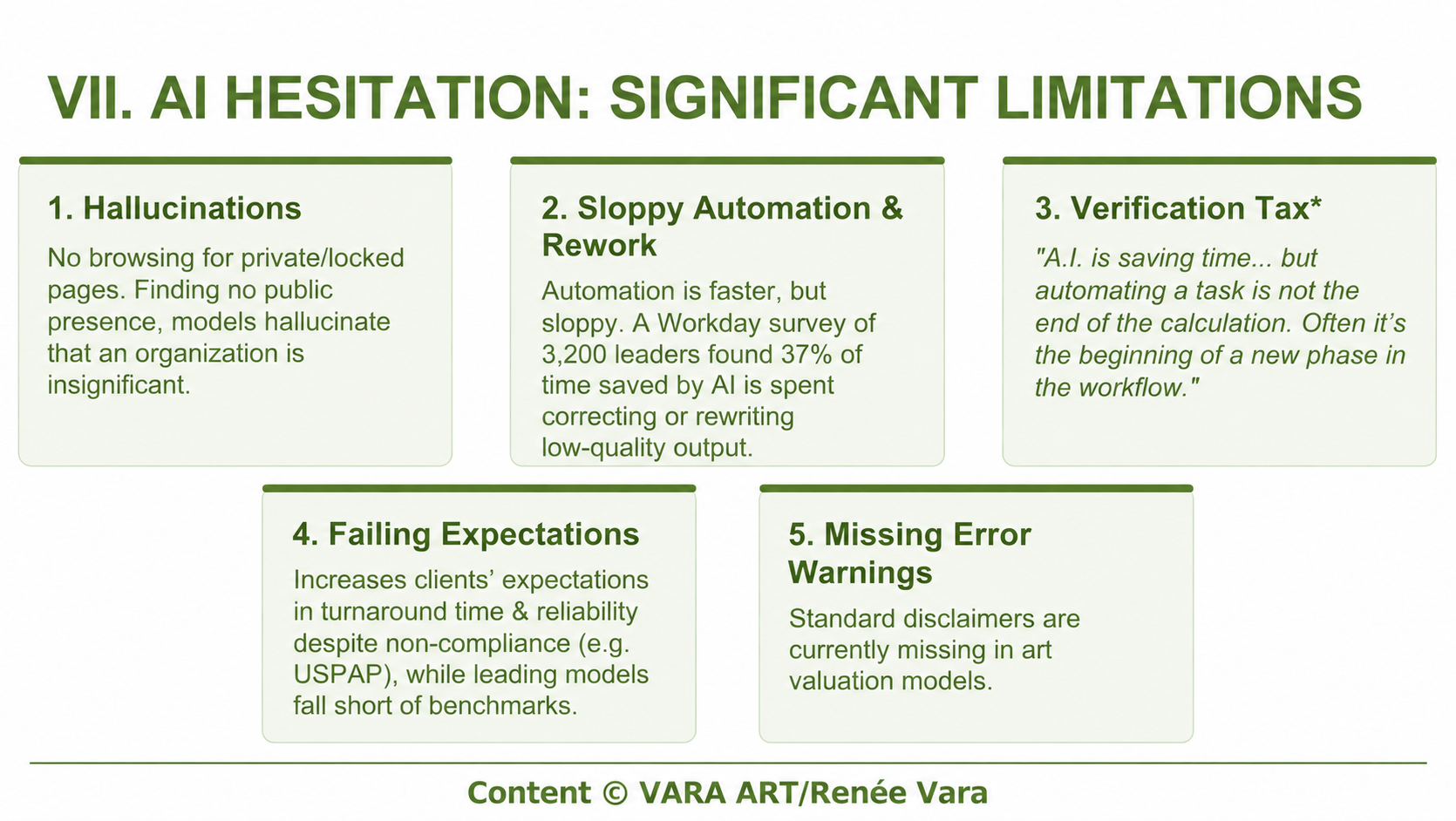
Make Limitations Explicit: Users need to clearly understand what a result can support, where uncertainty remains, and when further expertise is required. At the present moment, the red-flagging is limited in warnings, including areas of hallucinations at odds with an esoteric field of art scholarship.
Incomplete Information: Gaps in accessible data can lead to misleading conclusions and AI hallucinations, often at odds with esoteric artistic and art market values. Missing information requires verification, not assumptions about a work’s significance or value.
Automation and Rework: Reviewing and correcting AI-generated material can offset the time saved from AI processing. A Workday survey of 3,200 leaders found 37% of time saved by AI must be spent correcting, rewriting, or verifying low-quality output.
The “Verification Tax”: Generating an answer begins another stage of the workflow: checking its sources, reasoning, and relevance, which requires expertise.
Expectations vs. Capabilities: Faster turnaround should not come at the expense of appraisal accuracy, reliable evidence, or professional judgment, but in 5 case studies presented, often did.
Clear Limitations & Assumptions: Users need explicit explanations of what an AI-generated result means and aligns with in codified appraisal practice. Often, expert review is necessary to verify and discriminate the data against the specific art market context.
Proprietary Models & Non-Standard Values: AI-generated valuations often diverge from USPAP requirements and standard definitions, creating compliance risks for IRS, insurance, and legal requirements.
Uniqueness of AI Products: Every AI art valuation product is distinct, and therefore demands rigorous, in-depth analysis of its proprietary models and terminology before use. These takeaways summarize the AI products reviewed.
Thank you to IFASIC’s board, organizers, delegates, and attendees who contributed to such a dynamic discussion!
Content ©️ Vara Art/Renée Vara